PEOPLE · CHOICES · RELATIONSHIPS
Relationship Board
Balance in relationships. Wisdom in context.
Harmful extremes← Balance in context →Harmful extremes
About the tool and biblical resources
Explore 13 episodes from David's life through six biblical counseling themes: conflict, authority, truth, care, justice and repentance.
A free reflection tool for family, friends and church, drawing on biblical counseling principles and themes in Paul David Tripp’s teaching. It is not his official test, a diagnosis or a measurement of spiritual maturity.
13 episodes from David's relationships
- Jonathan — faithful friendship1 Samuel 18–20
Jonathan makes a covenant with David and helps him when Saul wants to harm him.
- Saul — David spares him in the cave1 Samuel 24
David has an opportunity to kill Saul but chooses to spare him, despite being unjustly pursued.
- Nabal — the impulse for revenge1 Samuel 25:2–22
After Nabal's insulting refusal, David arms his men and sets out with violent intentions.
- Abigail — David accepts correction1 Samuel 25:23–35
Abigail intervenes wisely. David abandons revenge and acknowledges that he has been stopped from shedding blood.
- Saul — David spares him again1 Samuel 26
David has another opportunity to kill Saul, but restrains himself and refuses personal revenge.
- Mephibosheth — kindness and honor2 Samuel 9
David seeks Jonathan's son and offers him protection, land and a place at his table.
- Bathsheba and Uriah — grave abuse of power2 Samuel 11
David brings Bathsheba, Uriah's wife, to the palace, has sexual relations with her, tries to conceal the pregnancy and arranges Uriah's death.
- Nathan — David acknowledges his guilt2 Samuel 12:1–13
Nathan confronts David through a story. David acknowledges that he has sinned against the Lord.
- Tamar and Amnon — grave harm in the family2 Samuel 13:1–29
Amnon rapes Tamar. David hears what happened and becomes angry.
- Absalom — closeness and rupture2 Samuel 14–15
After Absalom returns, David initially refuses to see him; later they draw closer. Absalom subsequently rebels.
- Shimei — self-control under insult2 Samuel 16:5–13
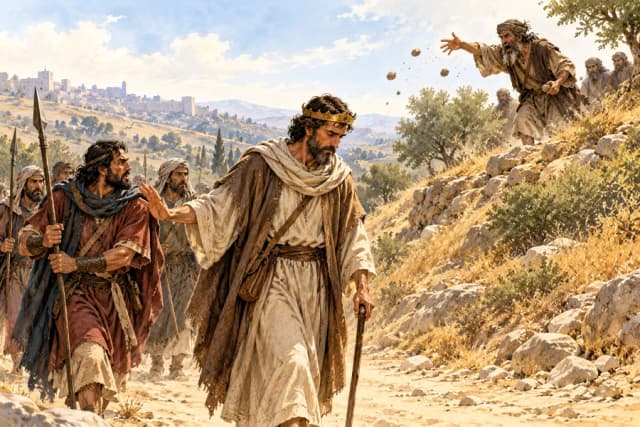
Shimei curses David and throws stones at him. David refuses Abishai's proposal to kill him.
- Absalom — grief and a return to responsibility2 Samuel 18:31–19:8
David mourns his son's death. After Joab rebukes him concerning the men who defended his life, he goes to the gate and resumes his public role.
- Adonijah — the absence of correction1 Kings 1:5–6
Adonijah seeks to proclaim himself king. The text notes that David had not rebuked his behavior.