
Family and church: places where we learn to love
We can be thankful for the people in our lives while acknowledging that we need to grow in how we treat them. Family and church are called to be places where we listen, serve, speak truth and learn to ask forgiveness. Closeness also exposes impatience, fear, a desire for control and the tendency to avoid difficult conversations.
That need led me to develop the Relationship Board: a free tool that organizes questions for biblical self-assessment. You can use it to reflect on a conversation in your marriage, how you correct your child, a conflict between friends or your responsibilities at church.
The starting point is my own response: what did I do, what was I seeking and what is mine to change? I do not ask the tool to confirm automatically that the other person is the problem.
A biblical counseling perspective: from response to the heart
Matthew 7:3–5 calls us to examine our own lives before trying to correct someone else. James 4:1–3 helps us ask which desires fuel conflict. Sometimes I want something good — respect, peace or closeness — but end up hurting others to obtain it. Assessment begins when I can honestly name that change.
This attention to our motives also appears in Paul David Tripp’s relationship resources. The tool draws on biblical counseling themes: examining the heart, confession, repentance and practical acts of love. Its questions were written for this tool; they are not a test created by Tripp.
The aim is change supported by Christ's grace: receiving truth about myself, asking forgiveness and practicing a different response. An indicator can organize observations, but cannot know the heart or replace prayer, reading Scripture and help from a mature person.
Why David's example is so helpful
David's life shows that the same person can respond wisely in one relationship and fail seriously in another. His friendship with Jonathan shows loyalty and support. In the cave, David spares Saul and restrains his men despite being unjustly pursued. Restraint does not require him to abandon truth or his own safety.
When confronted by Nabal's refusal, David prepares violent revenge. Abigail intervenes, and he receives her counsel and changes his decision. The episode shows the value of timely correction: a wrong response can be stopped. The case of Bathsheba and Uriah, however, reveals abuse of power and grave injustice. Confession before Nathan does not erase the harm or its consequences.
The board follows 13 episodes and explains each response. It shows what the Bible passage says and why we suggest a particular understanding. In the episodes with Tamar, Absalom or Adonijah, care is considered alongside the duty to protect, guide and seek justice. Where the Bible gives insufficient detail, we leave the question open.

Six indicators for noticing my own response
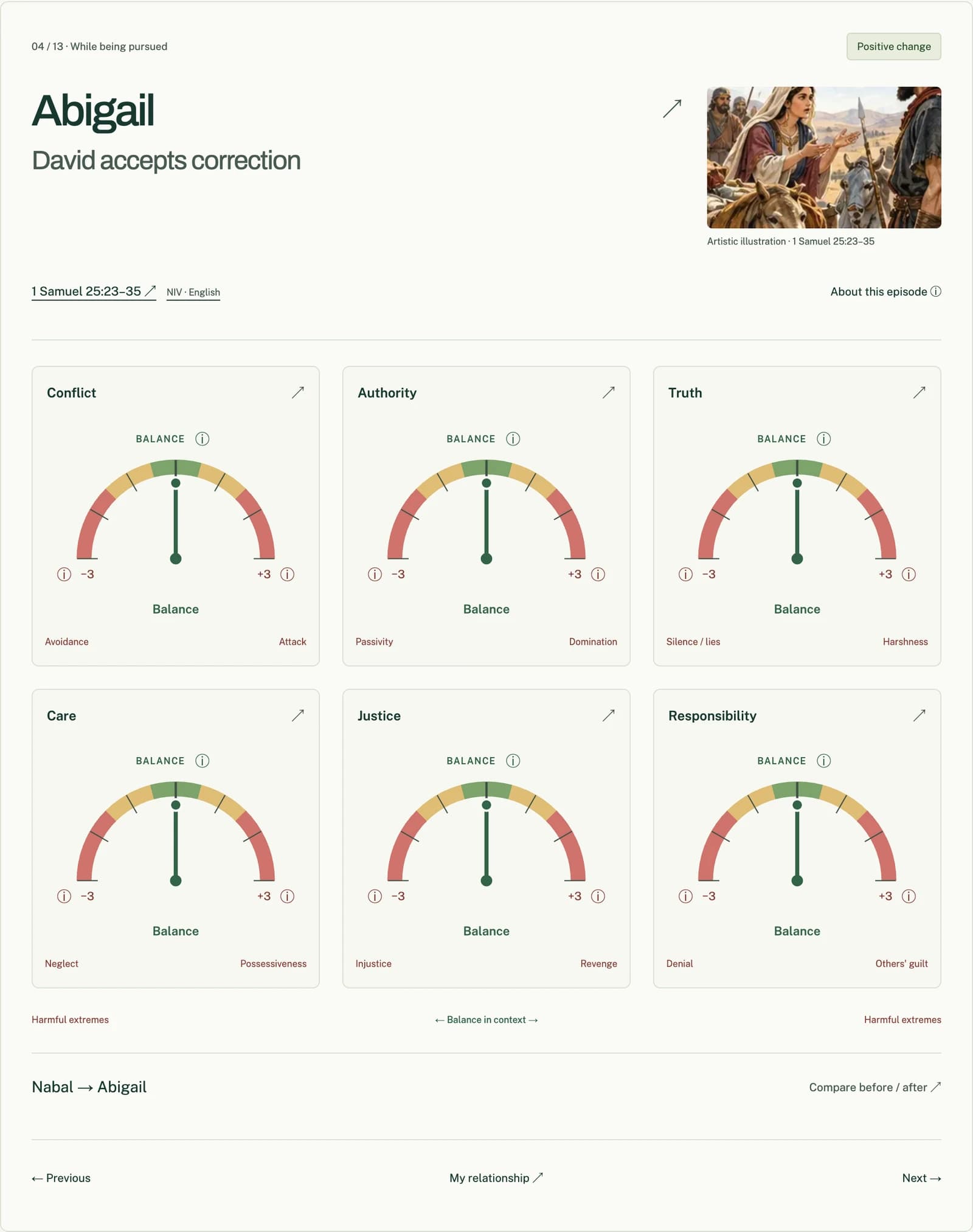
Conflict helps me notice whether I avoid a necessary conversation or attack. Authority concerns responsibility, power and the boundaries of my role. Truth examines both concealment and humiliating speech. Care seeks the person's practical good. Justice concerns protection and the response to wrongdoing. Responsibility asks what I need to confess and repair.
The green center represents a wise and loving response appropriate to the situation. Both extremes are harmful. The center does not mean sharing blame equally, always giving in or finding a midpoint between truth and wrongdoing. A firm boundary, a rightful rebuke or leaving danger can be the appropriate response.
In the tool, you can open the explanations and read the Bible passages. This article offers a starting point; there you can explore each question at your own pace.
Relationships with a spouse, child, friend or people at church
On the “My relationship” page, choose the relationship type and your own role. In marriage, consider your responsibility and response as a husband or wife. As a parent or caregiver, consider the child's age: a young child calls for different expectations from a teenager or an adult son or daughter.
In friendship, examine loyalty, truth and respect for the other person's freedom. At church, reflect from the perspective of a leader or member. At work, being a colleague, manager or employee changes your specific responsibilities. Greater authority also brings greater responsibility for protection and fairness.
Choose a precise situation. “Am I a good parent?” is too broad for a useful assessment. “How did I respond yesterday when my child refused to listen?” lets me observe actions, words and a possible step for change. Each relationship and role keeps its answers separately.
Three questions about a specific situation
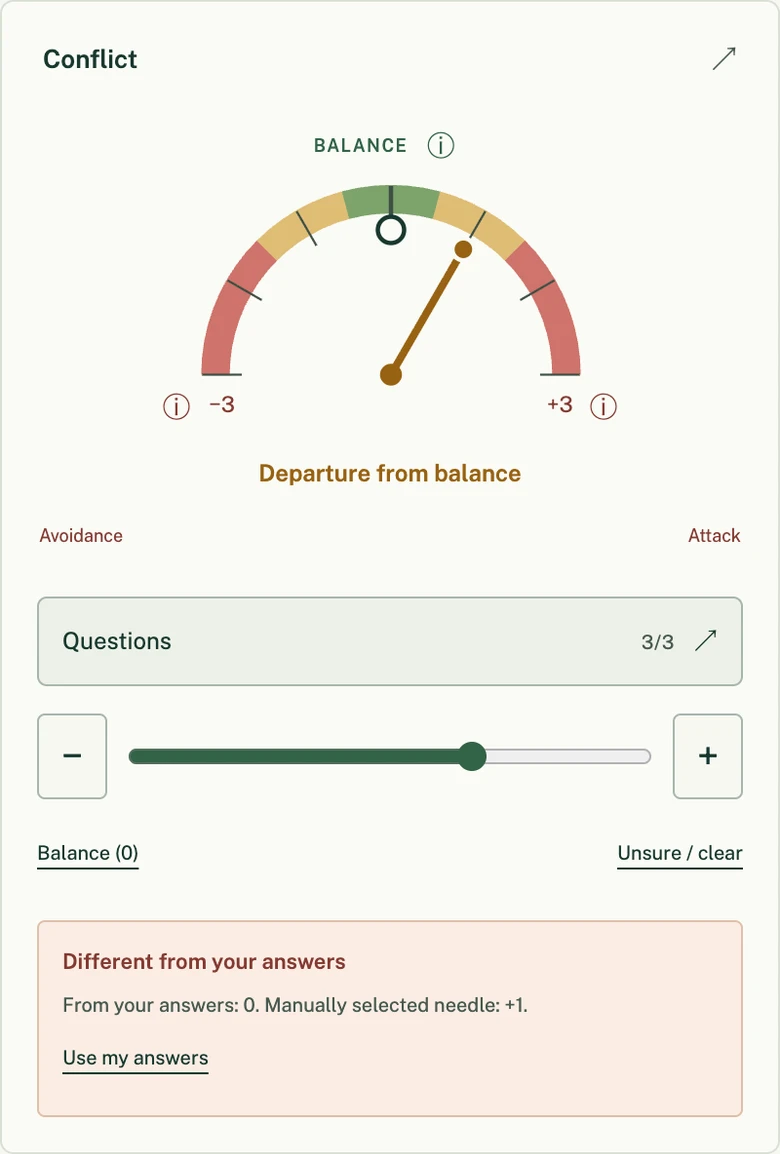
Choose a relationship and think about a recent situation. The questions help you consider three things: how you responded, what you wanted and how you received correction.
Answer honestly and leave blank what you cannot assess. The aim is to understand what you need to change, rather than obtain a result that makes you look good.
The tool brings your answers into view and helps you notice where more truth, care or responsibility is needed. You can explore how it works directly in the tool as you answer.
Compare two moments and look for concrete change
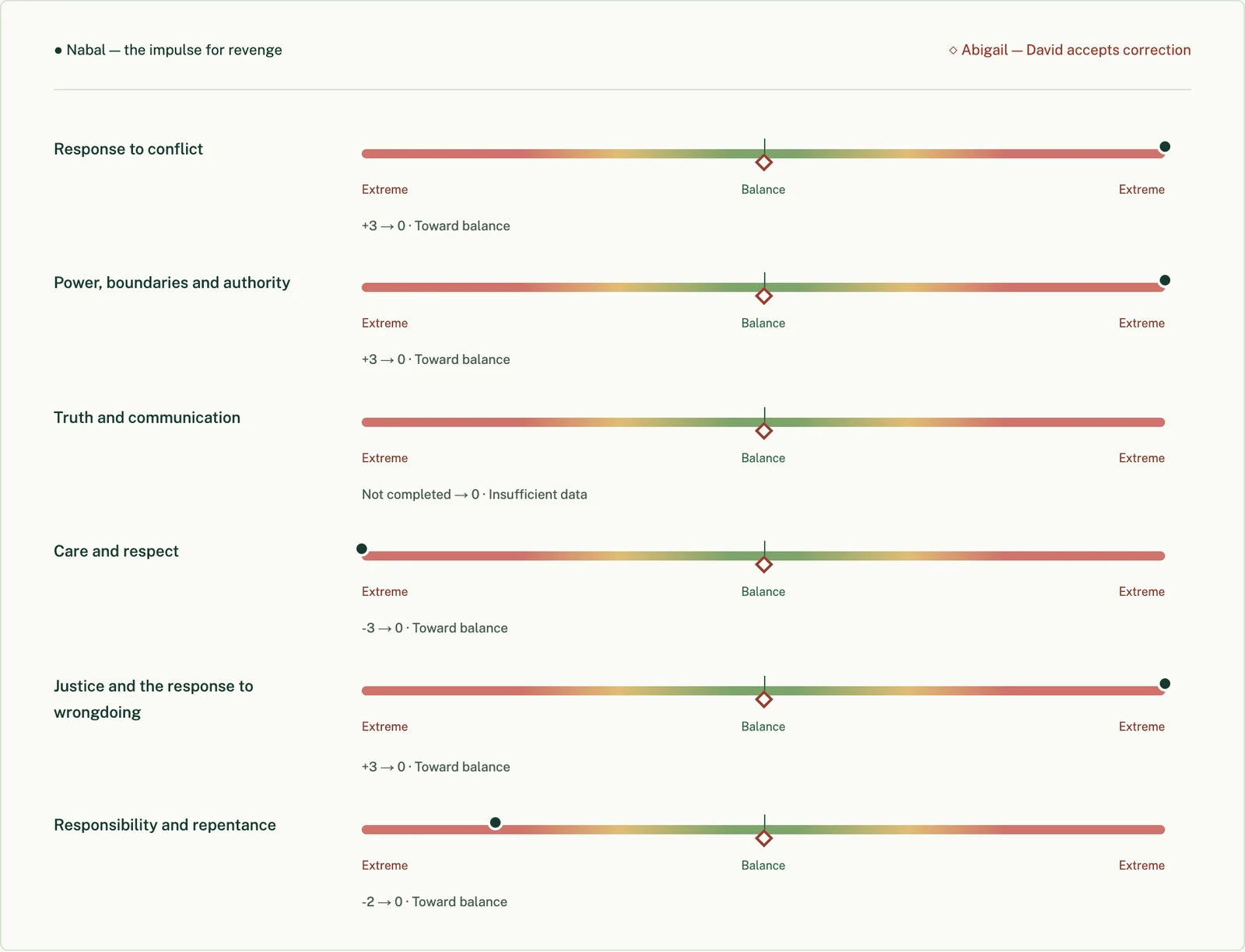
The “Compare” page places two biblical episodes or personal assessments side by side. Nabal and Abigail provide a clear before-and-after example: the impulse for revenge is followed by receiving correction. You can also revisit a situation in your own relationship after a conversation, confession or a period of intentional practice.
Comparison becomes useful when I also ask what changed in my actions. Did I listen fully? Speak truth without humiliating? Fulfill my responsibility? Repair what was mine to repair? Change becomes visible in how I treat people, and those close to me can help me see it more clearly.
Keep your reflection and choose a step for the next week
After reflecting, write down one step you can take: initiate a necessary conversation, ask forgiveness for specific words, honor a boundary or offer practical support. Galatians 6:1–5 holds together helping another person, gentleness, self-examination and personal responsibility.
You can keep your answers and download a reflection sheet to revisit later.
This sheet can support a conversation with a pastor, mentor or counselor if you choose to share it. The questions help you examine your own response without labeling people or blaming the person who was hurt. In abusive situations, protection, appropriate help and accountability for the wrongdoer take priority.
Begin with a simple prayer, one situation and one relationship: Lord, help me see the truth about my response, receive your grace and take the step of love that is mine to take. Then open the tool and answer patiently.